Overview of search ranking factors including popularity signals, PCTR models, semantic relevance, keyword matching, freshness, and various search modes.
How does a modern search engine decide which results you see first? It all starts with a base ranking, which is the initial relevance score of a document. From there, several sophisticated adjustments shape the final list. Keyword matching looks at how often your search terms appear, while embedding adjustments measure semantic similarity. For even deeper context, a semantic relevance model helps the system understand nuance and negation.
The system also relies heavily on user behavior. Popularity signals boost documents that get the most interaction. Predicted click-through rate models estimate the likelihood of a user clicking a result, and these can even be personalized using an individual's history once the search system has served at least one hundred thousand queries. Other ranking factors include document freshness, predicted conversions, and manual adjustments to promote or demote specific content.
When it comes to presenting these results, there are three main search modes. You can get a standard list of results, a generative summary written above the list, or a conversational search that supports follow-up questions. For generative AI searches, only the top five results are analyzed. These are shown either as short text snippets or longer, extractive passages. Finally, the system can block adversarial queries, preventing the underlying large language model from generating inappropriate answers.
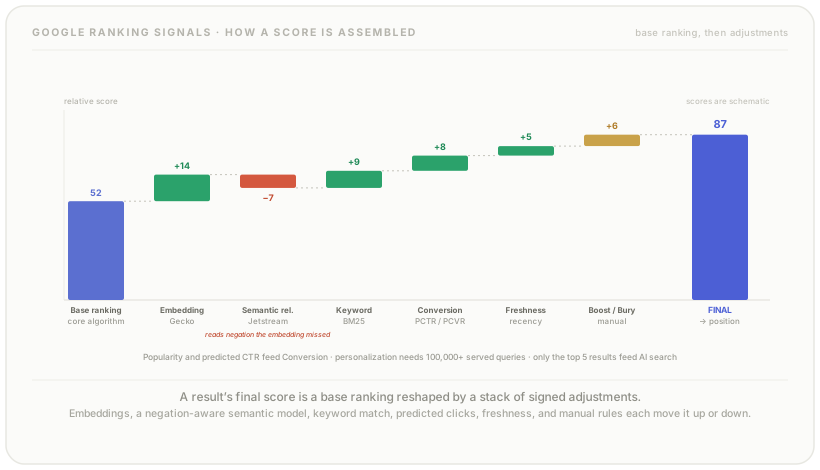
Popularity signals are derived from user interactions based on ingested user events. The more the users interact with a document, the stronger the boosts are. These data requirements check the overall readiness of your events to generate the popularity signals. This is regardless of the specific search app that you choose.
PCTR models predict the chances of viewing a document under a given context based on historical user events. It is an important factor considered in ranking. Threshold and metrics values are aggregated over all linked data stores with events data.
Personalised PCTR models take user-specific signals, such as their metadata or user history, into consideration. Only takes effect if at least 100,000 queries have been served by VAIS.

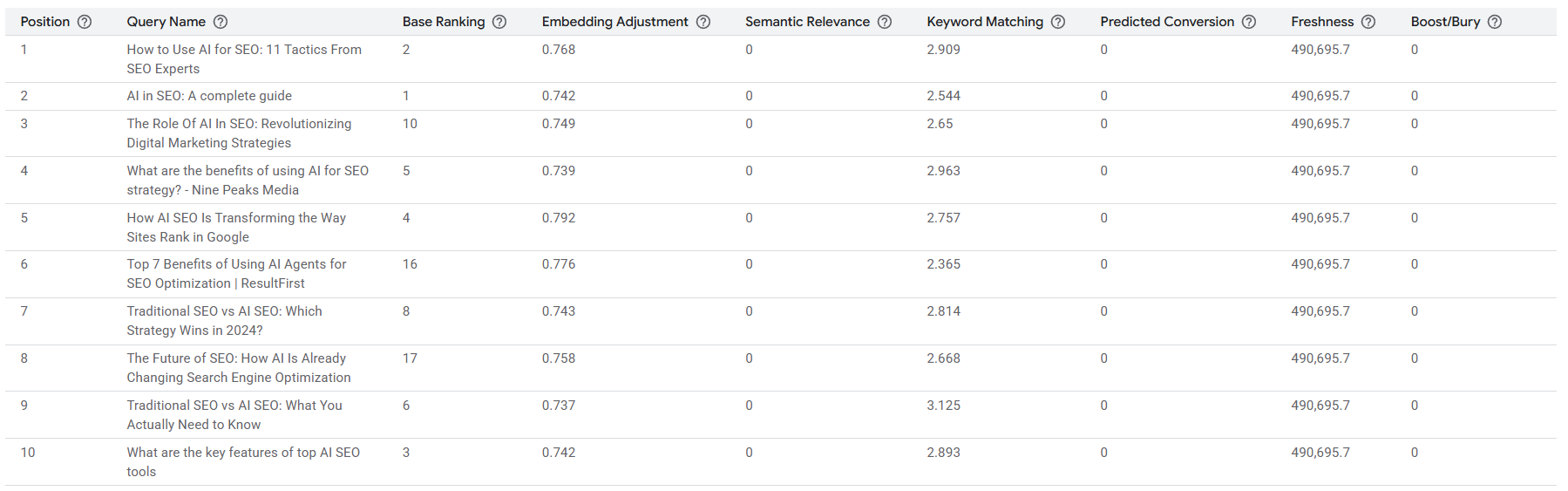
This is the initial relevance score of the document provided by the core ranking algorithm, before any adjustments are made.
Five.
Snippets – Short fragments of text from the search result content
Extractive answers – Longer passages of text from the search result content
Ignore adversarial query – Prevents LLM answers on adversarial queries.
 Dan Petrovic ·
Dec 24, 03:40
Dan Petrovic ·
Dec 24, 03:40
100% percent agree, just need to find the exact wording in Google’s docs and I’ll add it in as all of the above you’ve seen in the article comes straight from Google.
Dan Petrovic ·
SupportsExpands · ·
Dec 25, 05:06

You did a great research, but I would add another most important Google Ranking factor
Engagement
The more user engaged with the content, the more it gives positive data to search engine about the website
And what to do for engagement
All the SEO things
Like
On page …. give unique information
Technical…. User Don’t see page loading too much or broken images
User experience
Off page.