Content Optimizer is a content optimization engine that aligns your page content with AI model preferences, making your brand more likely to be selected, cited, and recommended in AI search and chat.
Optimize your pages for the way AI assistants evaluate, compare, and choose sources — not just for traditional search rankings.
Your page can rank #1 and still never appear in an AI answer.
When someone asks a question in ChatGPT, Gemini, Perplexity, Claude, or Google AI Mode, the model runs its own search, pulls a handful of competing pages, and decides — in a single pass — which source to trust, which passage to quote, and which brand to recommend.
That decision isn’t driven by keywords or backlinks. The model weighs clarity, relevance, structure, evidence, specificity, and how completely your content answers the question. Most pages were never written for that evaluation.
Traditional SEO optimizes for where you sit on a results page. Content Optimizer optimizes for something different: whether an AI grounding system would choose to quote you.
The mechanism is direct. When an AI assistant answers a question, it compares competing sources and selects the most quotable passage. Content Optimizer simulates that exact decision with an AI ranker — then iteratively rewrites your page, or the snippet an AI would lift from it, until the ranker prefers your content over the competition.
It isn’t a checklist or a static score. It’s a measured contest, run round after round, until your page is the one the model picks.
A single, transparent loop you can watch round by round.
Start with the question, entity, or search intent you want your page to win.
Content Optimizer pulls the live results for that query and gathers the competing pages an AI assistant would actually encounter and weigh.
An AI ranker scores your page against those competitors, using multiple independent samples for a stable, trustworthy starting rank.
Each round, the engine forms a hypothesis, applies a targeted edit, and re-runs the ranker. Changes that improve your rank are kept; the rest are discarded.
The loop repeats until your content is the preferred source — or until you’ve seen exactly which changes move the needle and which don’t.
When the run finishes, you get a plain-English narrative of what worked and a content brief of concrete edits to apply.
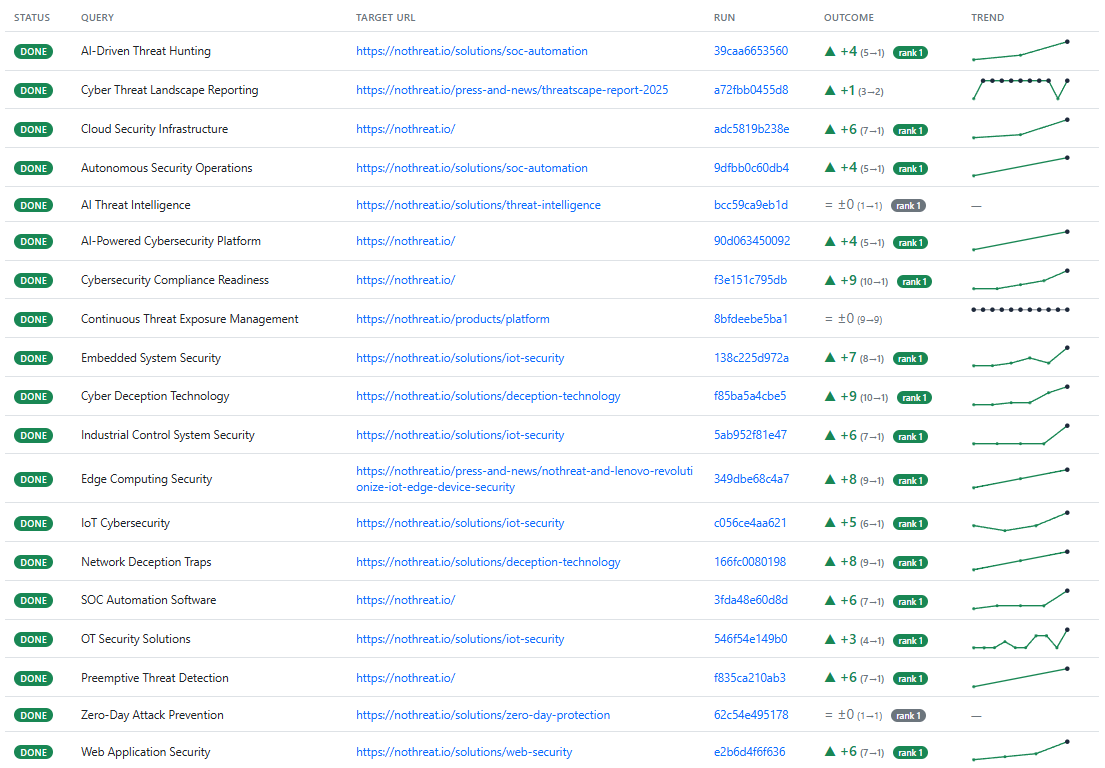
The chart at the top of this page is a real optimization run — a page starting near the bottom of its competitive set, climbing toward the top across ten rounds.
Move fast on a single passage, rework a full page, or keep your editorial team in the driver’s seat.
Tunes the extractive passage an AI would lift from your page. The fastest way to discover phrasing that wins, and a strong first pass.
Rewrites the full page body through precise, line-level edits. Slower and more thorough — it produces concrete on-page changes you can ship.
The same measured loop, but your team chooses the angle and writes each edit. Full editorial control, with the ranker keeping score.
Every change Content Optimizer tests is classified against a structured taxonomy — so you don’t just see that your rank improved, you see why.
How directly your content matches the query, the user’s intent, locality, and recency.
Named entities, numbers, specifics, and clear definitions — the concrete detail models reward.
Lead positioning, formatting, headings, and sentence length — how the content is built and structured.
Register, stance, voice, and tone — the qualities that make a passage read as confident and credible.
Whether content is shaped as a definition, comparison, how-to, guide, or case study for the question at hand.
Expertise, citations, certifications, statistics, and other signals of authority and trust.
Across runs, these factors accumulate into attribution data: which factors reliably move your rank, and which don’t — broken down for each AI model you care about.
Every run turns analysis into changes your team can act on.
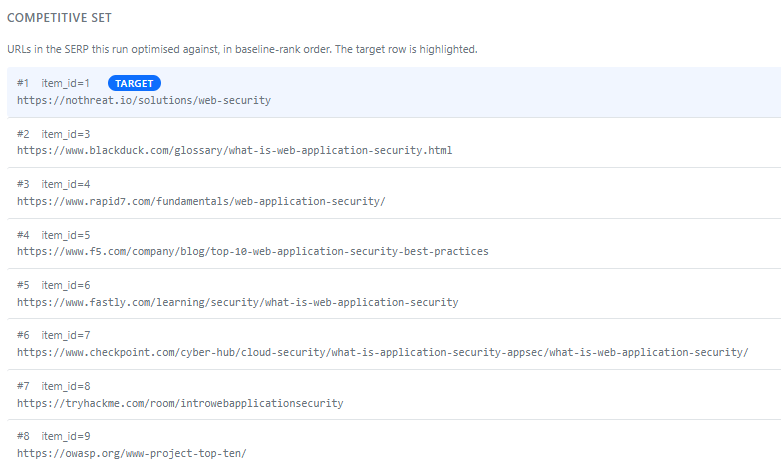
See your page measured against the exact competitors an AI would weigh for a query, and understand why one source is preferred over another.
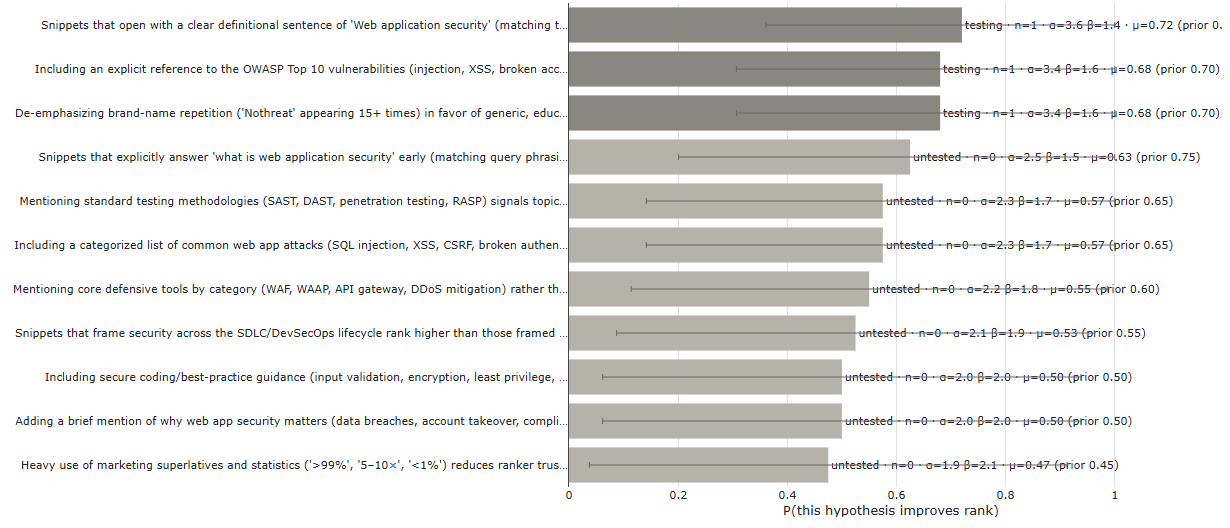
See which content attributes helped or hurt your page in the model’s evaluation — and where the next gain is most likely to come from.
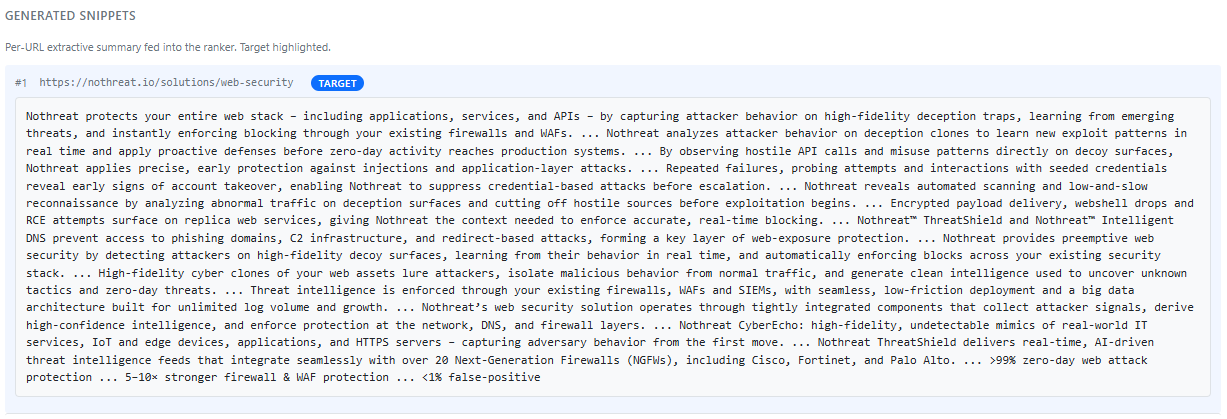
Sharpen the specific passages AI systems are most likely to quote, cite, or summarize when they answer on your topic.
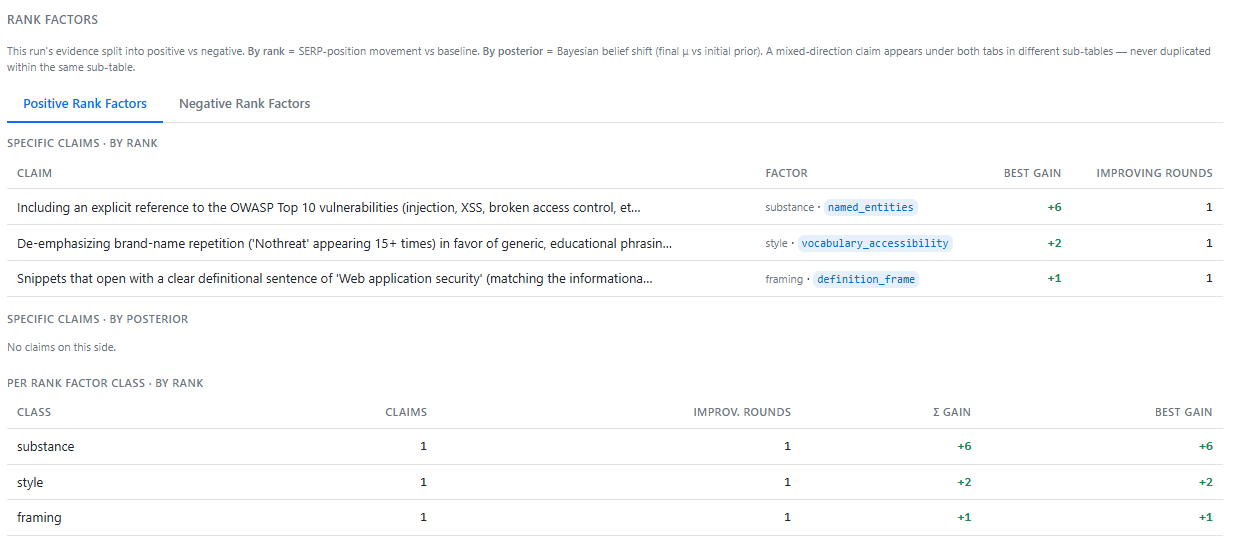
A plain-English summary of what worked, what didn’t, and the key insight from the run — so anyone on the team can follow the reasoning.
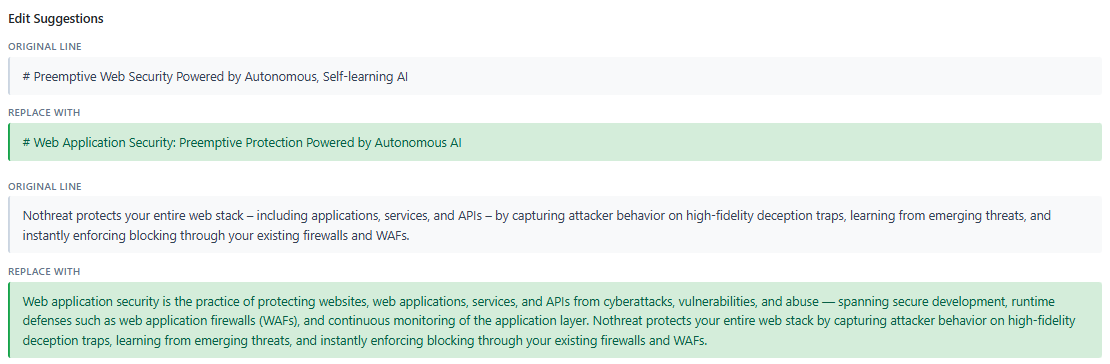
Optimization results turned into a clear, actionable editorial brief — the concrete page edits your writers can execute straight away.
Optimize a single page against a single query, or batch hundreds of page-and-query pairs in one pass. Content Optimizer reuses its research across the batch, so overlapping competitors are analyzed once — and you get a portfolio-level view of where you’re winning and where you’re not.
It works alongside your SEO — but it optimizes for a different moment in the user’s journey.
Does this replace my SEO?
No — it complements it. Traditional SEO gets your page into the competitive set an AI assistant considers. Content Optimizer helps you win selection once you’re there, so you’re the source that gets quoted and recommended.
Which AI models does it optimize for?
It models the source-selection behavior of the major AI search systems — Google AI Mode, ChatGPT search, Perplexity, Gemini, and Claude — and gives you rank-factor attribution broken down per model, so you can see what works where.
Do I have to rewrite my whole page?
No. Snippet mode tunes a single extractable passage. Page mode proposes targeted, line-level edits rather than a full rewrite. You always decide what to apply.
Will optimized content be penalized by Google?
No. The changes improve clarity, structure, evidence, and specificity — the same qualities that serve human readers. There’s no keyword stuffing and no manipulation; the page simply answers the question better.
How long does a run take?
A single snippet run completes quickly. Page-mode and batch runs take longer because they make more changes and test more competitors. Every run ends with a narrative summary and a content brief.
Can my editorial team keep control?
Yes. Human-in-the-loop mode lets your team choose each change and write it themselves, while the AI ranker keeps an objective score of whether it actually improved your standing.
What do I need to get started?
A page — or a set of pages — and the queries you want to win. We handle the competitive research, scraping, ranking, and reporting.
See Content Optimizer run on your own pages. Book a demo and we’ll walk through a live optimization for a query that matters to your business.