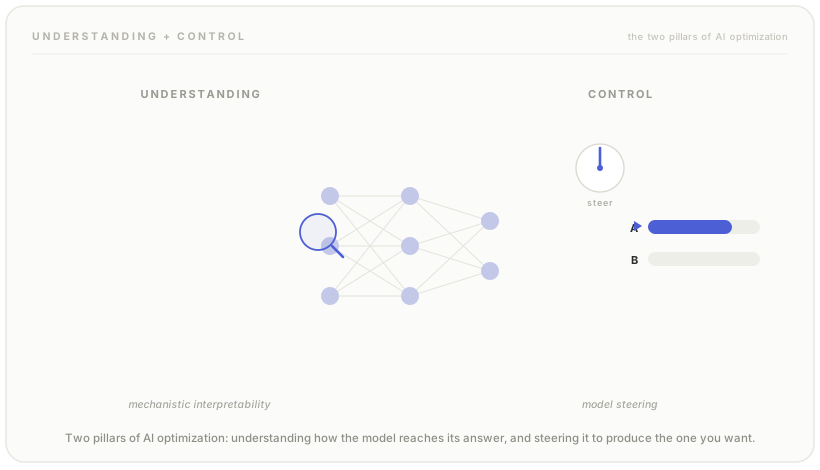
AI optimization relies on mechanistic interpretability to understand internal neural computations and model steering to actively control model behavior.
AI optimization relies on two core pillars: understanding how a model works, and controlling what it does. In the machine learning world, these are known as mechanistic interpretability and model steering.
First, let's look at mechanistic interpretability. This is the quest for deep model understanding. Instead of just looking at what a model outputs, researchers try to reverse-engineer the system. They look inside the neural network at individual components, like neurons and circuits, to map out the actual algorithms the model has created. The goal is to explain exactly how and why a model behaves the way it does.
Once we understand a model, we can control it. This is where model steering comes in. Steering is the practice of actively shaping a model's behavior, either while it is training or when it is running. We can do this in a few ways. We can use prompts to guide the output, or make direct interventions by modifying the model's internal states. We can even use our mechanistic understanding to target specific circuits, turning certain capabilities on or off. Ultimately, steering ensures that artificial intelligence aligns with our goals, safety rules, and values. Together, understanding and control turn AI from a black box into a tool we can reliably guide.
A subfield of AI interpretability that aims to understand neural networks at the level of individual components (neurons, attention heads, circuits, weights). Instead of only observing correlations between inputs and outputs, mechanistic interpretability seeks to reverse-engineer models into human-comprehensible algorithms, mapping out how internal computations give rise to behavior.
Goal: Explain how and why a model produces its outputs, not just what it produces.
The practice of controlling or guiding a model’s behavior at inference time or during training to make it produce desired outputs, avoid undesired ones, or follow specific constraints.
It encompasses:
Goal: not just to understand (interpretability), but to actively shape and control model behavior.
 Dan Petrovic ·
Aug 17, 12:40
Dan Petrovic ·
Aug 17, 12:40
Sign in with Google to comment.